

Program details
Bachelor of Computer Application (BCA)
Acharya Institute of Technology · Bangalore · India
Overview
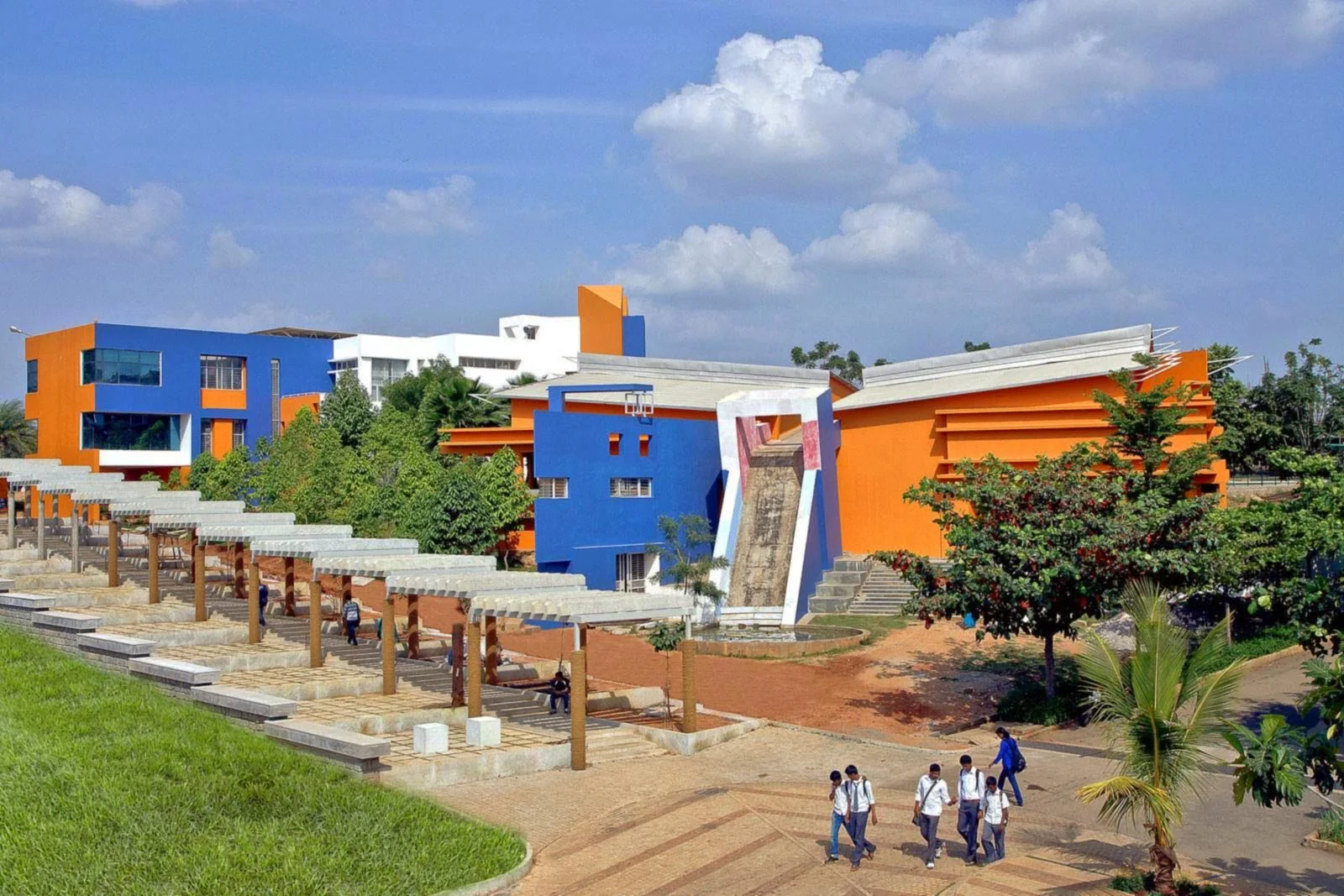
- University
- Acharya Institute of Technology
- Duration
- 4 Years
- Level
- Bachelors
- Discipline
- Computer Application
- Country
- India
- City
- Bangalore
- Tuition fees
- ₹565,000 / year
- Fee basis
- Per year
- Intakes
- August
Four-year Bachelor
Costs
- Tuition fees
- ₹565,000 / year
- Fee basis
- Per year
- Fee includes
- Tuition only
- Currency
- INR
- Visa fee
- ₹1,000
Scholarship information
INR 0
Intakes & deadlines
- August 2027Deadline near
Apply by 30 Nov 2026
24 days left
English requirement
- English test
- Not always required (waiver may apply)
Academic requirement
- Study level
- Bachelors
Documents required
All Academics
RequiredPassport copy
OptionalCitizenship
Optional
University
Acharya Institute of Technology
Bangalore, India
- Established
- 2000
- Scholarships
- INR 0
- Website
- acharya.ac.in
Studying in India
India
English-taught degrees at globally ranked universities, at a fraction of Western tuition, a short flight (or bus ride) from home.
- Average tuition
- INR 30,000 - 6,00,000 / year
- Living costs
- INR 10,000 - 25,000 / month
- Bachelor's length
- 3 - 4 years (MBBS 5.5)
- Work while studying
- Not permitted on a student visa
- Post-study stay
- No post-study work visa; employment visa only
- Visa for Nepali citizens
- Not required (1950 Treaty)
- Language
- English
- Intakes
- July, August, January
Living costs
Tuition
- Public universities: INR 30,000 - 1,50,000 per year for most arts, science and commerce degrees.
- Private universities: INR 1,50,000 - 6,00,000 per year for engineering, management, IT and allied health.
- Private medical (MBBS): INR 10,00,000 - 25,00,000 per year, which is the one field where India is not the cheap option.
Living
Most international students budget INR 10,000 - 25,000 a month, with the range driven almost entirely by city and housing choice.
- University hostel with mess: INR 5,000 - 15,000 per month, all in. This is what most students take in the first year.
- Shared private flat: INR 8,000 - 20,000 per month per person in Bengaluru, Pune or Delhi NCR; less in Manipal, Bhopal or Coimbatore.
- Food outside the mess: INR 4,000 - 8,000 per month.
- Local transport: INR 500 - 1,500 per month with a student metro or bus pass.
- Mobile and internet: INR 400 - 800 per month.
A realistic all-in figure for a year at a private university, including tuition, is INR 3,00,000 - 8,00,000. At a public university it can fall under INR 2,00,000. Health insurance is inexpensive but rarely automatic, so arrange a policy before you travel.
Work rights
While studying: India does not permit student-visa holders to take off-campus employment. Universities may offer on-campus assistantships, research stipends and internships that form part of the curriculum, and postgraduate research students at institutions such as the IITs and IISc commonly receive a monthly fellowship, but there is no general right to part-time work. Plan your budget on the assumption that your studies will not be self-funded through a job.
Internships: Curriculum-linked internships and industrial training are allowed and are standard in engineering, management and medical programmes. Many private universities run structured placement cells that start campus recruitment in the pre-final year.
After graduation: India has no post-study work visa comparable to Ireland's two-year stay back or the UK Graduate Route. To stay on you need a job offer and a conversion to an employment visa, which for most foreign nationals requires an annual salary above INR 16.25 lakh; teaching, language and some NGO roles are exempt from that threshold. Many graduates instead take their degree home, or use it to apply for a master's in a third country.
Nepali citizens are the exception. Under the 1950 Treaty of Peace and Friendship, Nepali citizens work in India on the same footing as Indian nationals, without a work permit or employment visa, in the private sector and in most public roles. If you hold Nepali citizenship, the work restrictions above do not apply to you.
Student visa process
Nepali citizens
No student visa is required. Under the 1950 Indo-Nepal Treaty of Peace and Friendship you may enter, study, live and work in India on a Nepali citizenship certificate or passport. Universities will normally ask for your citizenship certificate, passport, academic transcripts and a migration or transfer certificate at enrolment. Keep certified copies of everything: the paperwork is done at the university rather than at a consulate.
All other nationalities
- Secure admission. Apply directly, or through the government's Study in India portal, and receive a formal admission or provisional admission letter from a recognised institution.
- Apply for the student visa. Submit the online application on the Indian visa portal, then book an appointment at the Indian mission in your country. The student visa is normally issued for the length of the course, up to five years, and is extendable in India.
- Prepare the documents. Passport valid at least six months beyond entry, admission letter, academic transcripts, proof of funds covering tuition and living costs, proof of accommodation, passport photographs and the visa fee. Medical and MBBS applicants must additionally show their NEET result.
- Attend the interview and biometrics where the mission requires them. Processing is commonly two to four weeks, so apply as soon as the admission letter arrives.
- Register after arrival. If your visa is valid for more than 180 days, you must register with the Foreigners Regional Registration Office (FRRO) within 14 days of arriving, and keep that registration current for the length of your course.
Rules and fees change; always confirm the current requirements with the Indian mission in your country before you book travel.
Education system
Indian higher education is regulated by the University Grants Commission (UGC), with professional councils layered on top: the All India Council for Technical Education (AICTE) for engineering and management, the National Medical Commission (NMC) for medicine, the Bar Council of India for law, and the Council of Architecture for architecture. Before you accept an offer, confirm the institution is UGC-recognised and that your specific programme carries the right council approval, because that is what determines whether the degree is accepted for further study or licensing back home.
Types of institution
- Central and state universities - publicly funded, lowest fees, most competitive entry (Delhi University, Banaras Hindu University, Jawaharlal Nehru University).
- Institutes of National Importance - the IITs, NITs, IIITs, IIMs and AIIMS, admitted through national entrance exams.
- Deemed and private universities - Manipal, Amity, VIT, SRM, Christ, Symbiosis and similar; higher fees, easier admission timelines, strong campus placement records.
- Affiliated colleges - teach under a parent university's syllabus and award its degree; quality varies widely, so check the parent university's standing.
Grading and credits
Most universities use a 10-point CGPA scale, and many have adopted the Choice Based Credit System, which makes transferring credits between recognised Indian universities workable. Under the National Education Policy 2020, four-year honours bachelor's degrees are becoming standard and give direct access to a one-year master's or a PhD.
Entrance exams to plan for
- NEET-UG - compulsory for MBBS, BDS, AYUSH and veterinary, including for foreign nationals.
- JEE Main and JEE Advanced - engineering at NITs, IIITs and the IITs.
- CUET-UG - undergraduate admission at central universities.
- CAT, GATE, NATA, CLAT - management, postgraduate engineering, architecture and law respectively.
Private universities usually run their own entrance tests or admit on school results, which is why their timelines are more forgiving than the national exams.
Courses offered at Acharya Institute of Technology
Anaesthesia & Operation Theatre Technology
Bachelors · 4 Years · August
B.Sc - Fashion & Apparel Design
Bachelors · 4 Years · August
Bachelor of Architecture
Bachelors · 4 Years · August
Bachelor of Arts (BA)
Bachelors · 4 Years · August
Bachelor of Arts - Criminology
Bachelors · 4 Years · August
Bachelor of Business Administration ( BBA) - Aviation
Bachelors · 3 Years · August
Bachelor of Business Administration ( BBA) - Business Analytics
Bachelors · 3 Years · August
Bachelor of Business Administration ( BBA) - Entrepreneurship with EDII IIM
Bachelors · 3 Years · August
Bachelor of Business Administration ( BBA)- Sports
Bachelors · 3 Years · August
Bachelor of Business Administration (BBA)
Bachelors · 3 Years · August
Bachelor of Business Administration (BBA) - Digital Marketing
Bachelors · 3 Years · August
Bachelor of Commerce (B.Com)
Bachelors · 4 Years · August