Quick answer
Nepali students study in Ireland by securing an offer, paying the deposit, then applying through AVATS for a long-stay 'D' study visa, decided by the Embassy of Ireland in New Delhi. You must show at least EUR 10,000 for living costs on top of fees. On Stamp 2 you can work 20 hours a week in term, and after a masters usually stay up to two years on Stamp 1G.
- Most Nepali applicants start 8 to 10 months before a September intake and apply between November and March.
- Nepali banks generally need a MoEST No Objection Certificate before remitting tuition fees to Ireland.
- Indicative masters tuition is EUR 10,000 to 30,000, plus EUR 10,000 to 18,000 a year in living costs depending on the city.
- Many Irish universities accept a 3-year TU bachelors for a masters with good grades, but some programmes want four years.
- Postgraduate programmes commonly ask for IELTS 6.5 overall with no band below 6.0.
Ireland offers English-taught degrees inside the European Union, one-year taught masters programmes, up to two years of post-study work for masters graduates, and an economy built around technology, pharmaceuticals, medical devices and finance. This guide is written for students applying from Nepal: which institutions to look at, what it costs in euro and rupees, how Irish universities read +2 and TU results, the visa process through New Delhi, work rights and what happens after you graduate. Where a figure changes every year we give an indicative range and say where to check it.
Why Nepali students choose Ireland
One-year masters, up to two years to work
Most taught masters degrees in Ireland run for twelve months. Graduates of eligible masters programmes (NFQ Level 9) can then stay for up to two years under the Third Level Graduate Programme, known as Stamp 1G, to look for and take up work without a job offer first. Eligible honours bachelors graduates (Level 8) get up to one year. One year of fees and living costs followed by up to two years of work is the core economic case for Ireland.
A technology and pharma hub
Dublin hosts the European headquarters of many large technology companies, and Cork, Galway and Limerick have clusters of pharmaceutical, biotech and medical-device manufacturing. That is why data analytics, computer science, pharmaceutical science and business analytics are among the most popular masters choices for international applicants.
English-speaking, EU-based, recognised qualifications
You study and live in English, and your qualification is placed on Ireland's National Framework of Qualifications (NFQ), so employers can read its level. The sector is small enough that you can realistically understand every serious option before applying.
Universities and colleges in Ireland
Irish higher education has three main groups. The right one depends on your academic profile, budget and the kind of programme you want.
Traditional universities
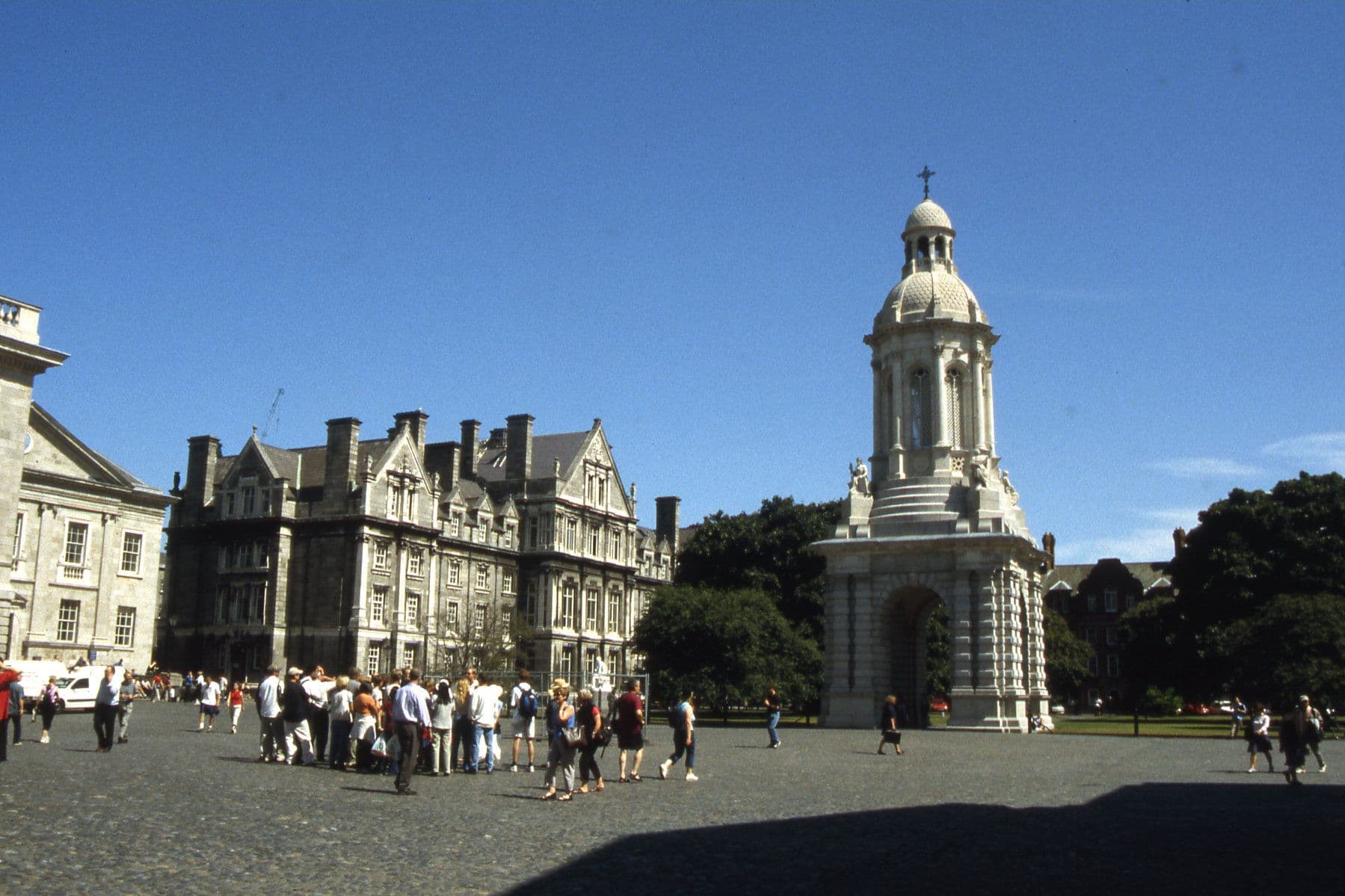
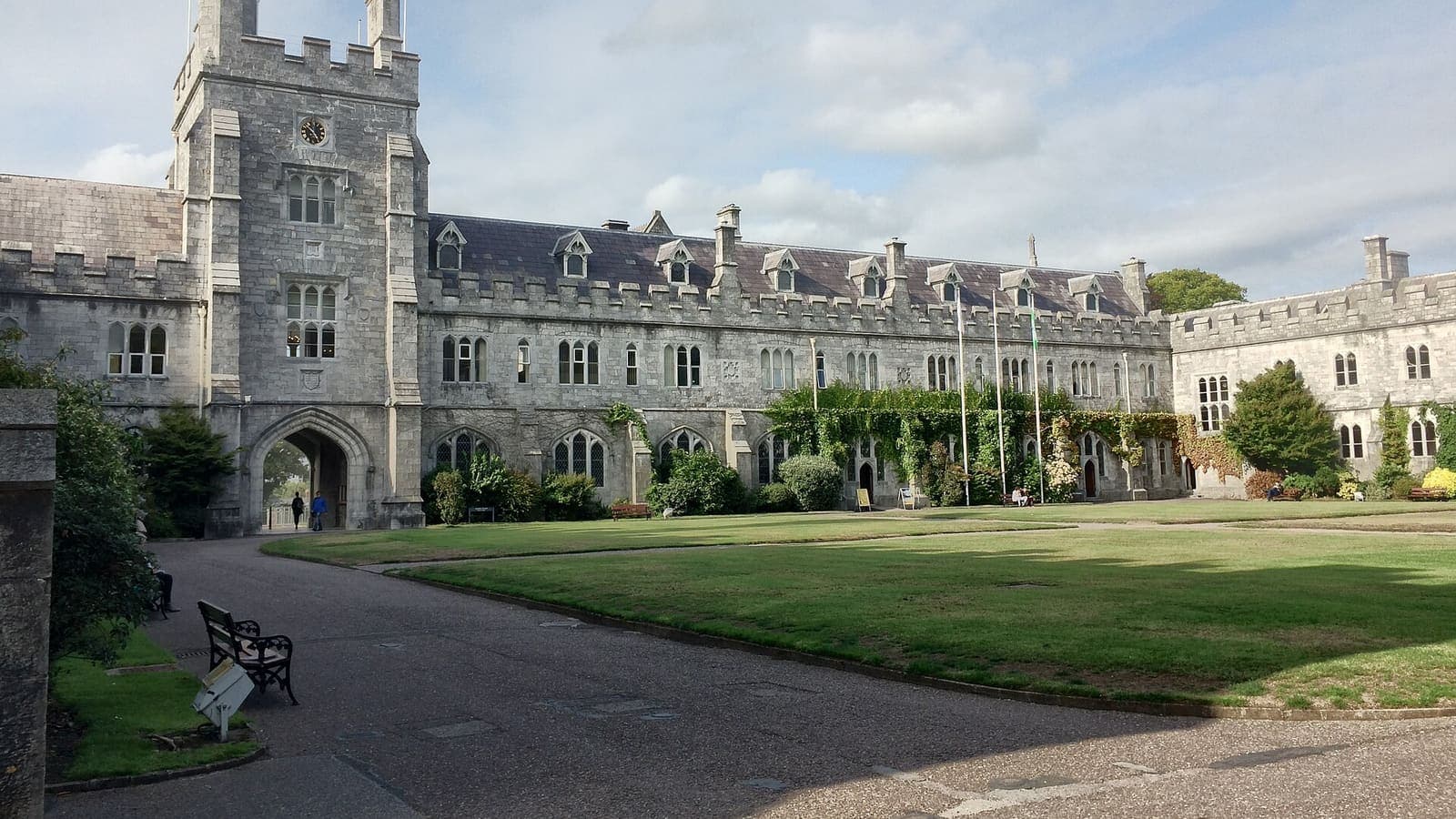
Trinity College Dublin, University College Dublin (UCD), University College Cork (UCC), the University of Galway, Maynooth University, the University of Limerick and Dublin City University (DCU) are the research universities. They have the strongest international recognition, the widest choice of masters programmes and usually the highest entry requirements and fees.
Technological universities
Technological universities were formed by merging institutes of technology. They include TU Dublin, Munster Technological University (MTU), Atlantic Technological University (ATU), South East Technological University (SETU) and the Technological University of the Shannon (TUS). They are applied and industry-linked, often with more accessible entry requirements, and suit computing, engineering and business students who want practical programmes.
Private colleges
Independent colleges such as Griffith College and Dublin Business School (DBS) offer degrees validated by Ireland's quality agency or partner universities, mostly in business, computing and law, often with more flexible entry and intakes. Before paying, confirm the specific programme is on the NFQ at the level you expect (Level 9 for a masters) and that it qualifies for Stamp 1G. Not every programme does.
| Type | Best for | Watch for |
|---|---|---|
| Traditional university | Strong academic profile, research, brand recognition | Higher fees and competition for popular courses |
| Technological university | Applied computing, engineering, business, industry links | Check the programme's NFQ level and placement options |
| Private college | Flexible entry, multiple intakes, business and IT | Confirm NFQ level and Stamp 1G eligibility before paying |
Popular courses for Nepali students in Ireland
- MSc Data Analytics or Data Science, with demand across tech and finance employers
- MSc Computer Science, Software Engineering, Cloud Computing and Cybersecurity
- MSc Artificial Intelligence and Machine Learning
- MSc Business Analytics, Fintech and Finance
- MSc Pharmaceutical Science, Biotechnology and Medical Device Technology
- MSc Supply Chain Management and Logistics
- MBA and MSc Management or International Business
- Bachelors programmes in computing, business and engineering
Nursing is also popular, but registration with the Nursing and Midwifery Board of Ireland (NMBI) is a separate process from a degree, so research the registration route before enrolling on any nursing-related programme.
When are the intakes in Ireland?
September is the main intake, with the widest choice of courses and scholarships. Some institutions also run a smaller January or February intake, mostly for business, computing and some masters programmes. For September, shortlist from October to December of the previous year and apply between November and March, because popular programmes and scholarships fill early.
Cost of studying in Ireland from Nepal
Your total cost is tuition plus living costs plus one-off costs (visa, flights from Kathmandu, insurance, immigration registration). Tuition depends on the programme, not just the university: business, computing and engineering usually cost more than humanities, and medicine is in a different bracket. To get a rough rupee figure, multiply euro amounts by the current rate published by Nepal Rastra Bank; at around NPR 155 per euro, EUR 10,000 is about NPR 15.5 lakh, but the rate moves, so recalculate before you plan.
| Item | Typical range | Notes |
|---|---|---|
| Masters tuition | EUR 10,000 to 30,000 | Most taught MSc programmes fall around EUR 13,000 to 25,000 |
| Bachelors tuition (per year) | EUR 10,000 to 25,000 | Medicine and some specialist courses cost considerably more |
| Living costs (outside Dublin) | EUR 10,000 to 14,000 | Cork, Galway, Limerick, Waterford |
| Living costs (Dublin) | EUR 12,000 to 18,000 | Rent is the biggest variable |
| Private medical insurance | Roughly EUR 150 to 600 | Required for immigration; depends on the policy |
| IRP registration | EUR 300 | Paid on registration in Ireland; check the current fee |
| City | Rent (shared / student room) | Total monthly budget |
|---|---|---|
| Dublin | EUR 700 to 1,200 | EUR 1,200 to 1,700 |
| Cork | EUR 600 to 900 | EUR 1,000 to 1,400 |
| Galway | EUR 600 to 900 | EUR 1,000 to 1,400 |
| Limerick | EUR 500 to 800 | EUR 900 to 1,300 |
Entry requirements for Nepali students
For a bachelors degree
- Completed +2 (NEB Grade 12) or A Levels with good grades; each university sets its own GPA or grade expectation and competitive programmes ask for more
- Subject prerequisites for some courses, for example mathematics for computing and engineering
- English language evidence (see below)
For a masters degree
- A recognised bachelors degree with good grades; each university converts Nepali percentages and GPAs in its own way
- Three-year bachelors degrees (for example a TU BBS or BA) are accepted by many Irish universities with good grades, but some programmes want a four-year degree or extra study, so check each course page
- A relevant background for technical programmes (for example BSc CSIT, BIT, BCA or BE for computing and data), though conversion masters accept other disciplines
- English language evidence, a statement of purpose, CV and often two references
English tests
IELTS Academic and PTE Academic both have test centres in Kathmandu and are the tests most Nepali applicants take. Postgraduate programmes commonly ask for IELTS 6.5 overall with no band below 6.0, and some ask for more. TOEFL iBT is widely accepted, and some institutions accept the Duolingo English Test. A few universities consider an English-medium degree as evidence, but do not assume this for Nepali degrees; check the exact rule for your programme before booking.
How to apply from Nepal: step by step
- 1Shortlist 4 to 6 programmes across at least two institution types, checking NFQ level, fees, intake and entry requirements.
- 2Book IELTS or PTE in Kathmandu early enough to have results before you apply.
- 3Prepare documents: transcripts, character certificates and degree certificates, passport, CV, statement of purpose, references and any work experience letters.
- 4Apply directly to each institution online. Most masters applications go direct to the university.
- 5Receive your offer, meet any conditions, and pay the deposit or fee required to confirm your place. Nepali banks generally need a No Objection Certificate (NOC) from the Ministry of Education, Science and Technology (MoEST) before they remit fees abroad, so apply for it as soon as you have the offer.
- 6Arrange private medical insurance and gather your proof of funds, including any education loan from a Nepali bank.
- 7Apply online through AVATS for a 'D' study visa and lodge your passport and documents at the visa application centre named on your summary. The decision is made by the Embassy of Ireland in New Delhi.
- 8Once approved, book flights from Kathmandu and accommodation, and plan to arrive in time for orientation.
- 9After arrival, register for your Irish Residence Permit (IRP) to receive Stamp 2 permission.
The Ireland student visa for Nepali citizens
Nepali citizens need a long-stay 'D' study visa for a full-time course in Ireland. Ireland has no embassy in Nepal: applications from Nepal are handled by the Embassy of Ireland in New Delhi, and you lodge your passport and documents through the visa application centre (VFS) named on your AVATS summary. Check the current arrangements on the embassy and Irish Immigration Service Delivery (ISD) websites before you apply, as service providers and addresses can change.
- Letter of acceptance for a course on the Interim List of Eligible Programmes (ILEP)
- Evidence that tuition fees have been paid (in full, or the required amount)
- Proof of access to at least EUR 10,000 per year for living costs, in addition to fees
- Private medical insurance
- English language test results
- Academic transcripts, and an explanation of any gaps in your education history (common for Nepali applicants after +2 or a bachelors)
- A signed letter explaining why you want to study this course in Ireland and your plans after
Our step-by-step Ireland student visa from Nepal guide covers every document, how to present Nepali bank and loan evidence, and the most common refusal reasons.
Can Nepali students work while studying in Ireland?
With Stamp 2 you can work up to 20 hours a week during term and up to 40 hours a week during the official holiday periods (June to September, and 15 December to 15 January). You need a PPS number to be paid through payroll. Typical student jobs are in retail, hospitality, warehousing, delivery and campus roles. Pay is at least the national minimum wage, which is reviewed every year.
The stay-back: Stamp 1G
After graduating from an eligible programme you can apply for Stamp 1G under the Third Level Graduate Programme: up to one year for Level 8 honours bachelors graduates and up to two years for Level 9 masters graduates, subject to an overall limit on time spent on the scheme. On Stamp 1G you can work full-time without an employment permit while you look for a graduate role.
From graduate job to settling in Ireland
The usual path is: graduate, move onto Stamp 1G, find a job, then move onto an employment permit. The Critical Skills Employment Permit covers occupations in shortage, including many ICT, engineering, science and health roles, and holders can generally move to Stamp 4 after two years, which allows work without a permit. The General Employment Permit covers a wider range of jobs with different conditions. Salary thresholds and occupation lists are revised periodically, so check the current rules with the Department of Enterprise.
Worked example: first-year cost of a masters from Nepal
Two illustrative budgets for a one-year taught masters, using mid-range planning figures. Your own total depends on the programme fee, your accommodation and your lifestyle.
| Item | MSc in Dublin | MSc in Cork or Galway |
|---|---|---|
| Tuition | 18,000 | 16,000 |
| Rent (11 months) | 11,000 | 8,250 |
| Food, transport, phone, personal | 5,500 | 5,000 |
| Medical insurance | 400 | 400 |
| IRP registration | 300 | 300 |
| Visa fee, flights, set-up costs | 1,800 | 1,800 |
| Approximate total | 37,000 | 31,750 |
At around NPR 155 per euro, that is very roughly NPR 57 lakh for Dublin and NPR 49 lakh for Cork or Galway. Treat the rupee figures as a rough guide only, because the exchange rate moves. Part-time work can offset part of your living costs, but it should not be in your plan for tuition, for loan repayments in Nepal or for the funds immigration asks you to show.
Common mistakes applicants make
- Choosing a course by name without reading the modules or checking it is on the ILEP at the right NFQ level
- Applying in May or June for a September start, after popular programmes and scholarships have filled
- Building proof of funds at the last minute with large unexplained deposits into a Nepali bank account
- Leaving the MoEST NOC until after the fee deadline, so the bank cannot remit the deposit in time
- Budgeting for Dublin with EUR 10,000: the visa minimum is not a realistic Dublin budget
- Arriving without temporary accommodation and losing weeks to the housing search
- Picking a subject with little Irish demand and expecting the stay-back to turn into a job
Is Ireland right for you as a Nepali student?
| Ireland is a strong fit if you... | Think carefully if you... |
|---|---|
| Want a one-year masters in data, computing, pharma, finance or engineering | Want a subject with limited Irish employer demand |
| Value up to two years of stay-back after a masters | Need the cheapest possible destination overall |
| Can budget realistically for rent, or choose a regional city | Can only afford Dublin on the visa minimum |
| Are ready to job-hunt actively during your course | Expect a job to follow automatically from the degree |
Documents checklist for Nepali applicants
Most Irish institutions ask for a similar set of documents. Prepare them once as clean, consistently named PDFs and reuse them across applications.
- Passport bio page
- SEE and +2 (NEB) mark sheets, transcripts and character certificates
- Bachelors transcript and degree certificate (or provisional certificate) for masters applicants
- English test results (IELTS, PTE, TOEFL or an accepted alternative)
- Statement of purpose tailored to each programme
- CV of one or two pages
- Two references: academic, or one academic and one professional
- Work experience letters, if any, with dates and responsibilities
- Certified English translations of any document in Nepali
A 12-month plan for a September 2027 start
| Month | Milestone |
|---|---|
| Oct to Nov 2026 | Research courses and cities; set your budget; book IELTS or PTE in Kathmandu |
| Dec 2026 to Jan 2027 | Sit the test; draft SOP and CV; request references |
| Jan to Mar 2027 | Submit 3 to 5 applications; apply for scholarships |
| Mar to Apr 2027 | Accept the best offer; get the MoEST NOC; pay the deposit; apply for accommodation |
| Apr to Jun 2027 | Finalise funds, any loan, insurance and fee payment; apply for the visa |
| Jul to Aug 2027 | Receive decision; book flights; arrange temporary housing |
| Sep 2027 | Arrive, attend orientation, register for your IRP |
Starting later usually means fewer course options, fewer scholarships and a rushed visa application.
Compare Irish programmes, entry requirements and intakes on Admission Bravo and apply online for free.
Frequently asked questions
Is Ireland a good choice for Nepali students?
For many profiles, yes. Ireland offers English-taught one-year masters programmes, up to two years of post-study work for masters graduates, and a strong job market in technology, pharmaceuticals and finance. The main drawbacks are high living costs and a tight rental market, especially in Dublin.
How much does it cost to study in Ireland from Nepal?
Indicatively, a taught masters costs EUR 10,000 to 30,000 in tuition plus EUR 10,000 to 18,000 a year in living costs depending on the city. A typical first year totals roughly EUR 30,000 to 37,000, very roughly NPR 47 to 58 lakh at around NPR 155 per euro. The rate moves, so recalculate with the current Nepal Rastra Bank rate.
Where do Nepali students apply for an Irish study visa?
You apply online through AVATS, then lodge your passport and documents at the visa application centre named on your summary. Applications from Nepal are decided by the Embassy of Ireland in New Delhi. Check the current arrangements on the embassy website before you apply.
Do Irish universities accept a 3-year bachelors from Nepal for a masters?
Many do, provided your grades are good, but some programmes ask for a four-year degree or additional study. Check the entry requirements on each course page or ask the admissions office before applying.
Can Nepali students get PR in Ireland after studying?
Ireland has no points-based PR system, but graduates commonly move from Stamp 1G onto a Critical Skills Employment Permit and, after two years on it, to Stamp 4, which allows work without a permit. Long-term residence and citizenship are possible after further qualifying residence.
Ready to apply?
Create your free account, compare programmes and apply online - then track every step in one place.
Get started free