
Quick answer
The best Indian universities for Nepali students are the strongest ones they can enter through a route open to Nepali citizens: IITs through JEE Advanced, NITs and IIITs through DASA, central universities such as Delhi University, JNU and BHU, and private universities such as Manipal, Christ, Symbiosis and VIT. Check UGC recognition in India and, for regulated professions, the matching Nepal council.
- Nepali citizens can register for JEE Advanced directly as foreign nationals, without qualifying through JEE Main.
- NITs admit Nepali citizens through DASA, which has used JEE Main rank in recent cycles.
- Foreign nationals apply to Delhi University through the Foreign Students Registry, separate from CUET.
- Judge quality through NAAC grades, NIRF rankings and NBA accreditation rather than advertising claims.
- Shortlist two ambitious options, three realistic ones and one safe direct-admission option.
The best Indian university for a Nepali student is the strongest one you can enter through a route open to Nepali citizens, at a cost your family can sustain. Below they are grouped by type, with the admission route for each, so you can build a shortlist that matches your NEB results and budget.
IITs for Nepali students
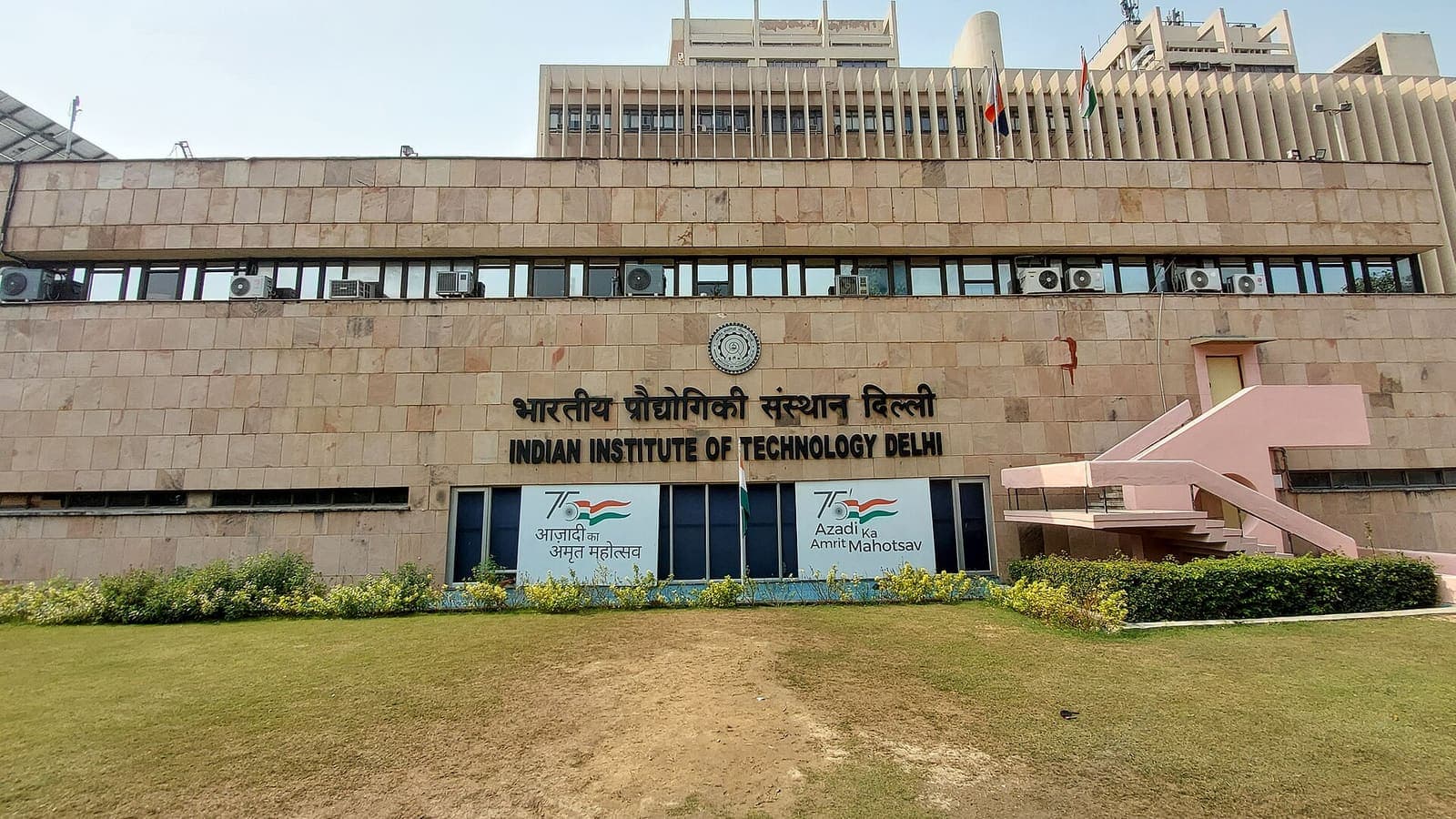
The IITs are India's most selective engineering institutes. Nepali citizens can register for JEE Advanced directly as foreign nationals, without qualifying through JEE Main, and compete for supernumerary seats. Older IITs such as Delhi, Bombay, Madras, Kanpur and Kharagpur are best known, but newer IITs also offer strong programmes and can be reachable at a lower rank.
How do Nepali students get into NITs and IIITs?
NITs admit Nepali citizens through DASA, which in recent cycles has used JEE Main rank. For many Nepali engineering applicants an NIT is the most realistic route into a government-funded institute with good placements. IIITs and some other centrally funded institutes also admit through DASA. SAARC nationals have historically paid a concessional fee; check the current brochure.
Central universities: Delhi University, JNU and BHU
- University of Delhi: wide choice of undergraduate programmes. Foreign nationals, including Nepali citizens, apply through the Foreign Students Registry, separate from CUET admissions for Indian students.
- Jawaharlal Nehru University (JNU): strongest in social sciences, languages and international studies, mostly at postgraduate level.
- Banaras Hindu University (BHU): a large residential university with medicine, engineering (IIT BHU), agriculture, arts and sciences, and a long history of Nepali students.
Central universities offer low tuition and strong academics, but foreign-national seats and procedures differ from the Indian student process. Read each university's international admissions page every year.
Private and deemed universities popular with Nepali students
Most Nepali students in India study at private or deemed universities, because admission is direct and the course range is wide. Some charge Nepali and SAARC students a separate rate, so ask. Well-known names include:
- Manipal Academy of Higher Education: medicine, dentistry, pharmacy, engineering and allied health in a dedicated university town.
- Amity University: large multi-campus private university with management, law, engineering and media programmes.
- Christ University, Bangalore: known for commerce, BBA, psychology and humanities.
- Symbiosis International University, Pune: management, law, media and computer applications.
- VIT (Vellore) and SRM Institute of Science and Technology (Chennai): large engineering universities with their own entrance tests.
- Lovely Professional University (LPU), Punjab, and Sharda University, Greater Noida: very wide course lists and active international offices.
How Nepali students should compare Indian universities
| Check | Where to look |
|---|---|
| Recognition in India | UGC for universities, AICTE for technical courses, NMC/INC/PCI for health courses |
| Quality signals | NAAC grade, NIRF ranking position, NBA accreditation for engineering programmes |
| Recognition in Nepal | Nepal Medical, Nursing, Pharmacy or Engineering Council for regulated professions |
| Total cost | Official fee notice for Nepali citizens plus hostel and living costs, converted at 1.6 NPR per INR |
| Outcomes | Department placement reports and Nepali alumni |
Build your shortlist in five steps
- 1Write down your course, your NEB Grade 12 result and whether you will sit JEE, NEET or neither. This decides which institution types are open to you.
- 2List two ambitious options (IIT, NIT or a top central university), three realistic options and one safe option with direct admission.
- 3For each, note the admission route, the application window and the fee for Nepali citizens from the official website.
- 4Check recognition in India and, for regulated professions, with the matching Nepal council.
- 5Talk to at least one current Nepali student at each of your top three choices before paying any deposit.
Worked example: choosing Computer Science
Consider a Nepali student with strong NEB science results who wants Computer Science. A sensible plan is to sit JEE Main for DASA (aiming for an NIT or IIIT), apply directly to two private universities with good CS departments as a backup, and apply for the Embassy of India and ICCR scholarships at the same time. If the JEE Main rank is strong, the NIT seat usually wins on cost and placements; if not, the private offer is already secured and no year is lost.
Common mistakes
- Choosing a university for its advertising or a consultancy's commission rather than the strength of the department.
- Relying on claims about rankings instead of checking NIRF, NAAC and NBA directly.
- Applying through only one route and losing a year when it does not work out.
- Ignoring the city: a cheaper fee in an expensive metro can cost more overall than a pricier fee in a smaller city.
- Not checking Nepal council recognition before enrolling in a regulated field.
Who each type of institution suits
| Institution type | Best suited to |
|---|---|
| IIT | Top science students ready for intensive JEE Advanced preparation |
| NIT / IIIT via DASA | Strong engineering applicants who want government-institute value |
| Central university | Arts, commerce, science and social science students seeking low fees |
| Private / deemed university | Students wanting direct admission, wider course choice and modern campuses |
Whichever type you target, follow the Embassy of India in Kathmandu for scholarship notices and apply for ICCR in parallel.
Compare Indian universities and programmes side by side on Admission Bravo and apply online for free.
Frequently asked questions
Can Nepali students get into IITs?
Yes. Nepali citizens can register for JEE Advanced directly as foreign nationals and compete for supernumerary seats at the IITs.
How do Nepali students get admission into NITs?
Through DASA (Direct Admission of Students Abroad), which in recent cycles has admitted foreign nationals, including Nepali citizens, based on JEE Main rank.
Which private universities in India are popular with Nepali students?
Manipal, Amity, Christ University, Symbiosis, VIT, SRM, Sharda and LPU are among the best known, each with direct international admissions.
How do I check if an Indian university is recognised in Nepal?
Check UGC recognition in India, plus AICTE, NMC, INC or PCI approval for the programme. For medicine, nursing, pharmacy and engineering, also confirm with the matching Nepal council before you enrol.
Ready to apply?
Create your free account, compare programmes and apply online - then track every step in one place.
Get started free