Quick answer
Nepali students can study in India without a visa under the 1950 India Nepal treaty. Choose a course, apply through the route it uses (direct admission, DASA, JEE Advanced, NEET-UG, or an ICCR or Embassy of India scholarship), then get the MoEST No Objection Certificate so a Nepali bank can remit fees. The NPR has long been pegged at 1.6 to the INR, so costs are predictable.
- Nepali citizens need no Indian visa and are generally not required to register with the FRRO.
- Nepali citizens can register for JEE Advanced directly, and apply to NITs and IIITs through DASA using JEE Main rank.
- Nepali banks normally need the MoEST No Objection Certificate before remitting fees to an Indian university.
- Private university non-medical tuition is about 1.5 to 5 lakh INR a year; private MBBS is often 10 to 25 lakh.
- Medicine, nursing, pharmacy and engineering graduates must also clear the matching Nepal council before practising in Nepal.
Nepali students can study in India without a visa. You choose a course, apply through the route that course uses (direct admission, DASA, JEE Advanced, NEET-UG, or an ICCR or Embassy of India scholarship), get an admission letter, obtain the MoEST No Objection Certificate so your Nepali bank can send the fees, and travel with your passport or citizenship certificate. Fees are far lower than in the UK, Ireland or Australia, the NPR is pegged to the INR so costs are predictable, and home is a bus ride away. This guide covers each step in order.
Why Nepali students choose India
- No visa: under the 1950 India Nepal Treaty of Peace and Friendship, Nepali citizens do not need an Indian visa to live and study in India.
- Predictable cost: Nepal Rastra Bank has long pegged the rupee at 1.6 NPR to 1 INR, so an INR fee converts at a known rate. Check that the peg still holds when you budget.
- Closeness: road and rail crossings such as Birgunj to Raxaul, Bhairahawa to Sunauli and Kakarbhitta to Panitanki make trips home cheap, with flights from Kathmandu to Delhi, Kolkata and Bangalore for longer distances.
- Familiar syllabus: NEB Grade 12 science covers much of the same ground as India's NCERT syllabus used for JEE and NEET.
- Scholarships aimed at Nepal: the Embassy of India in Kathmandu and ICCR have run schemes for Nepali students for many years.
How do Nepali students get admission in India?
India is not one admission system. Each type of institution admits Nepali citizens through its own route, and that route decides your exam, your timeline and often your fee.
| Route | Used by | What you need |
|---|---|---|
| Direct / foreign-national quota | Private and deemed universities | Application on the university portal with NEB results, sometimes an internal test or interview. |
| Study in India (SII) portal | Participating government and private institutions | One online application to several institutions; check the current list on the official Study in India site. |
| DASA | NITs, IIITs, SPAs and other centrally funded technical institutes | Nepali citizens apply as foreign nationals; admission has been based on JEE Main rank in recent cycles. |
| JEE Advanced (foreign national route) | IITs | Foreign nationals, including Nepali citizens, can register directly without qualifying through JEE Main. |
| NEET-UG | MBBS and BDS everywhere in India | A qualifying NEET-UG score, plus the eligibility certificate Nepal requires for studying medicine abroad. |
| ICCR and Embassy of India schemes | Placement at an Indian institution chosen by the scheme | Apply through the scheme notice published for Nepal; selection is merit based. |
Direct admission at private universities
Private and deemed universities such as Manipal, Amity, Christ, Symbiosis, VIT, SRM, Sharda and LPU run their own international admissions and see many Nepali applicants. You apply online with your SEE and NEB transcripts, and some programmes add a test or interview. Some charge Nepali and other SAARC students a different fee from other foreign nationals, so ask which rate applies to you. This is the fastest route, but quality varies between universities and between departments.
DASA and JEE for engineering
Nepali citizens are eligible for DASA as foreign nationals, which reserves supernumerary seats at NITs, IIITs and similar institutes. You sit JEE Main, then apply separately on the DASA portal. SAARC nationals, including Nepali citizens, have historically paid a concessional fee. For the IITs, Nepali citizens can register for JEE Advanced directly. JEE Main has had an exam centre in Kathmandu in recent cycles; confirm in the current information bulletin.
NEET for MBBS and BDS
India's National Medical Commission requires a qualifying NEET-UG score for every MBBS seat, including for Nepali citizens. Nepal separately requires an eligibility certificate before you start medical study abroad, and you must pass the Nepal Medical Council licensing exam to practise in Nepal. See our MBBS in India guide for Nepali students for the full process.
ICCR and Embassy of India scholarships
The Embassy of India in Kathmandu has announced scholarship schemes for Nepali students in past years, covering programmes such as engineering, medicine and general degrees, and ICCR schemes for Nepal are applied for through the A2A portal. Scheme names, seats and courses change, so follow the embassy's official website and notices each year.
Do Nepali students need a visa for India?
No. Nepali citizens can enter, live and study in India without a visa. Universities usually ask for a Nepali passport or citizenship certificate as identity proof, and air travel also needs one of the identity documents accepted by Indian immigration, so carry your passport if you have one. Unlike most foreign students, Nepali citizens are generally not required to register with the FRRO, but some universities still record foreign students' details with local authorities, so follow your international office's instructions.
Paying fees: the MoEST No Objection Certificate
To send tuition abroad through a Nepali bank, students normally need a No Objection Certificate (NOC) from Nepal's Ministry of Education, Science and Technology (MoEST), applied for online with the admission letter and academic documents. Banks then remit the fee against the NOC and the university's fee notice. Ask your bank which documents it needs for payments to India, because the process and limits are set by MoEST and Nepal Rastra Bank and can change.
Popular courses for Nepali students in India
| Course | Duration | How you get in | Licence in Nepal |
|---|---|---|---|
| MBBS | 5.5 years incl. internship | NEET-UG + counselling or quota | Nepal Medical Council licensing exam |
| BDS | 5 years incl. internship | NEET-UG | Nepal Medical Council licensing exam |
| BTech / BE | 4 years | JEE Advanced, DASA or university tests | Nepal Engineering Council registration |
| BSc Nursing | 4 years | University entrance or merit | Nepal Nursing Council licensing exam |
| BPharm | 4 years | University entrance or merit | Nepal Pharmacy Council registration exam |
| BBA / MBA | 3 / 2 years | Merit, university test, or CAT/GMAT for some MBAs | No licence needed |
| BCA / MCA | 3 / 2 years | Merit or university test | No licence needed |
Note that a 3-year Indian bachelors (BBA, BCA, BSc) is usually accepted in Nepal for jobs, but if you plan a masters in the UK or Ireland later, some universities there want a 4-year degree. Check the target course before you choose.
Cities Nepali students choose
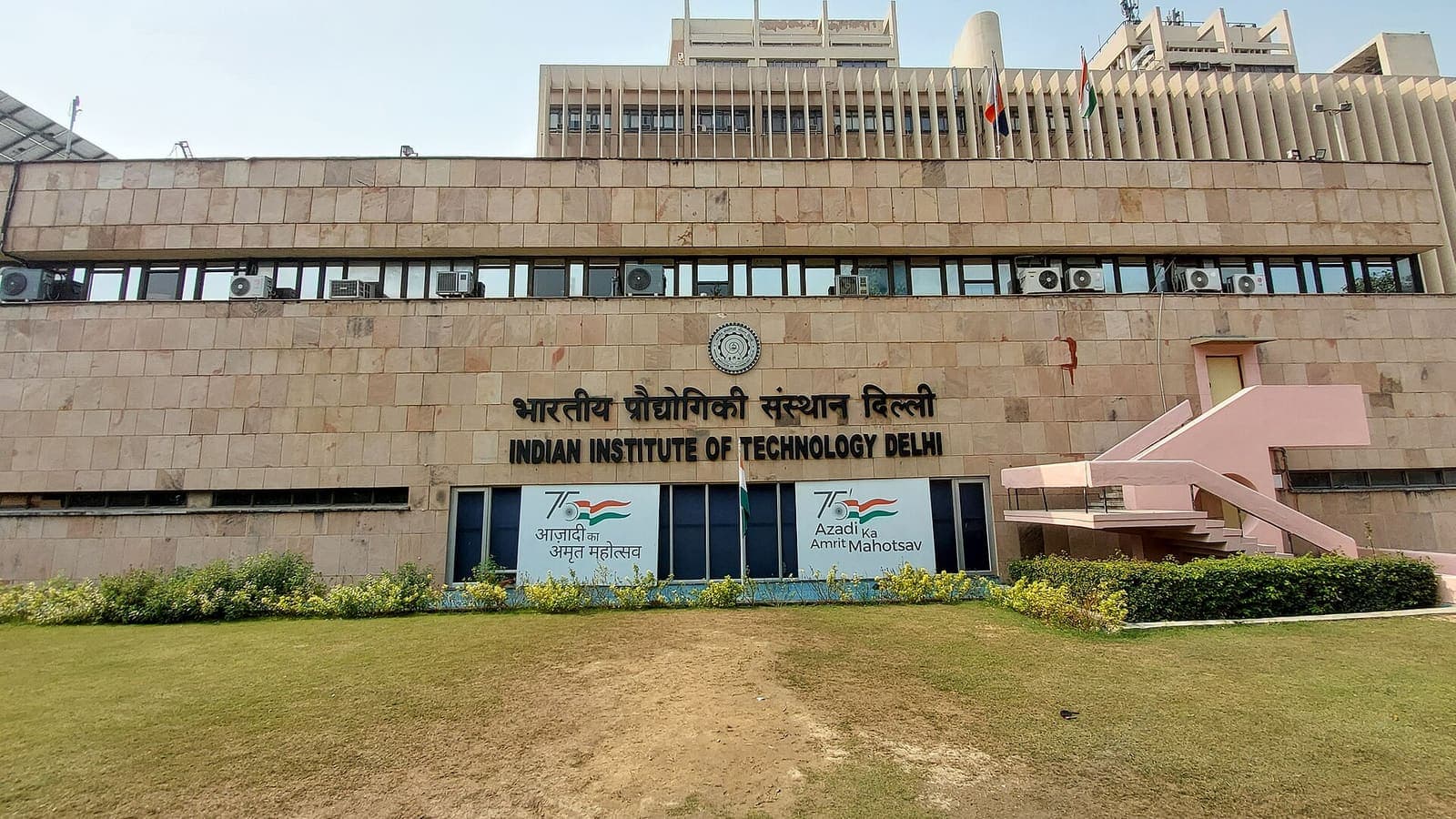
- Delhi NCR: central universities, IIT Delhi and many private universities in Noida and Gurugram. Direct flights from Kathmandu, higher rent.
- Bangalore (Bengaluru): technology capital with IISc and many engineering, nursing and management colleges. Mild weather, strong internships.
- Kolkata: lower living costs and a short trip home through Kakarbhitta or Biratnagar.
- Dehradun and Uttarakhand: cooler climate, many private colleges and an established Nepali community.
- Pune: Symbiosis and many engineering and management colleges, cheaper than Mumbai.
- Manipal, Chennai and Vellore: medicine, dentistry, pharmacy and engineering, including Manipal, VIT and SRM.
How much does it cost to study in India from Nepal?
Costs vary more by institution type than by city. The ranges below are indicative annual figures for planning only; multiply INR by about 1.6 for NPR at the current peg. Confirm the fee that applies to Nepali citizens on each institution's official fee notice.
| Item | Government / central institute | Private university | Deemed university |
|---|---|---|---|
| Tuition (non-medical) | Low to moderate; foreign-national or SAARC rates may apply | About 1.5 to 5 lakh | About 2 to 6 lakh |
| Tuition (MBBS) | Very few seats for foreign nationals | Often 10 to 25 lakh per year | Often quoted in USD; can exceed private rates |
| Hostel and mess | About 40,000 to 1.2 lakh | About 80,000 to 2 lakh | About 80,000 to 2.5 lakh |
| Books, travel, personal | About 30,000 to 80,000 | About 40,000 to 1 lakh | About 40,000 to 1 lakh |
Documents Nepali students need
- 1Nepali passport or citizenship certificate (a passport is the safer choice for flights and banking).
- 2SEE and NEB Grade 11 and 12 transcripts, character certificate and migration certificate; degree transcripts for postgraduate study.
- 3AIU equivalence certificate where the university asks for one, confirming your NEB qualification is equivalent to the Indian Class 12.
- 4Entrance scorecard (JEE, NEET or the university's own test) where applicable.
- 5Nepal eligibility certificate for MBBS or BDS, and any council letter you obtained for nursing or pharmacy.
- 6Admission letter and the MoEST No Objection Certificate for remitting fees.
- 7Passport-size photographs and a medical fitness certificate.
Step by step from Nepal
- 1Choose your course and career goal, then shortlist institutions by the admission route that course uses.
- 2Check recognition in India (UGC, AICTE, NMC, INC or PCI) and with the matching Nepal council for regulated professions.
- 3Register for the right exam on time; JEE Main, JEE Advanced and NEET-UG windows open months before the session.
- 4Apply through the correct portal: DASA, MCC counselling, the university's international page, ICCR A2A or the Embassy of India scheme.
- 5Accept your offer and pay the seat-confirmation fee only through the institution's official channel.
- 6Apply for the MoEST NOC and arrange fee remittance through your Nepali bank.
- 7Book accommodation and travel, and report to the university with original documents.
Will my Indian degree be recognised in Nepal?
Degrees from UGC-recognised Indian universities are widely accepted in Nepal for jobs and further study, and Tribhuvan University and other Nepali bodies handle equivalence where it is needed. For regulated professions the key step is the Nepal council: the Nepal Medical Council licensing exam for doctors and dentists, and registration with the Nepal Nursing Council, Nepal Pharmacy Council or Nepal Engineering Council. Check their rules before you enrol, not after you graduate.
Ready to shortlist? Compare Indian programmes, entry requirements and intakes on Admission Bravo and apply online for free.
Frequently asked questions
Do Nepali students need a visa to study in India?
No. Under the 1950 India Nepal treaty, Nepali citizens do not need an Indian visa. Carry a Nepali passport or citizenship certificate as identity proof, and a passport for flights.
Can Nepali students apply through DASA?
Yes. Nepali citizens apply as foreign nationals for supernumerary seats at NITs, IIITs and similar institutes, based on JEE Main rank in recent cycles. SAARC nationals have historically paid a concessional fee; check the current DASA brochure.
Do I need an NOC from MoEST to study in India?
Nepali banks normally ask for the MoEST No Objection Certificate before remitting fees to a foreign institution, including in India. Apply online with your admission letter and check current requirements with MoEST and your bank.
How much does it cost to study in India from Nepal?
Non-medical tuition at private universities is commonly about 1.5 to 5 lakh INR a year, plus roughly 80,000 to 2 lakh INR for hostel and food. At 1.6 NPR per INR, that is roughly 2.4 to 8 lakh NPR in tuition. MBBS costs much more.
Is an Indian degree valid in Nepal?
Degrees from recognised Indian universities are widely accepted. For medicine, nursing, pharmacy and engineering you must also pass or register with the matching Nepal council, so check its rules before you enrol.
Ready to apply?
Create your free account, compare programmes and apply online - then track every step in one place.
Get started free